Magazine
< back
Materials, Space Requirements and Accessibility: Key Factors to Consider When Designing a Bathroom unit
A bathroom unit must meet a range of different needs: complement the style of the room, make the most of the available space, and keep everyday essentials within easy reach. For this reason, its design cannot be limited to choosing finishes or assessing overall dimensions.
Other factors also make a difference, including the internal configuration, the materials used for accessories, and how easily each item can be accessed. These aspects should be considered from the earliest stages of the design process, especially when space is limited.
Inoxa's bathroom solutions are designed to combine functionality and design, with pull-out systems developed to improve the organisation of internal storage space.
1. Materials: Durability and Consistency with the Overall Design
Bathrooms are exposed to specific environmental conditions. Humidity, frequent contact with water and everyday use call for careful material selection, not only for the external surfaces of the unit but also for its internal components.
The assessment should take into account the intended use, the quality of the finishes and the characteristics of each individual component. Internal accessories, for example, must integrate seamlessly with the
unit while offering properties suitable for the conditions in which they will be used.
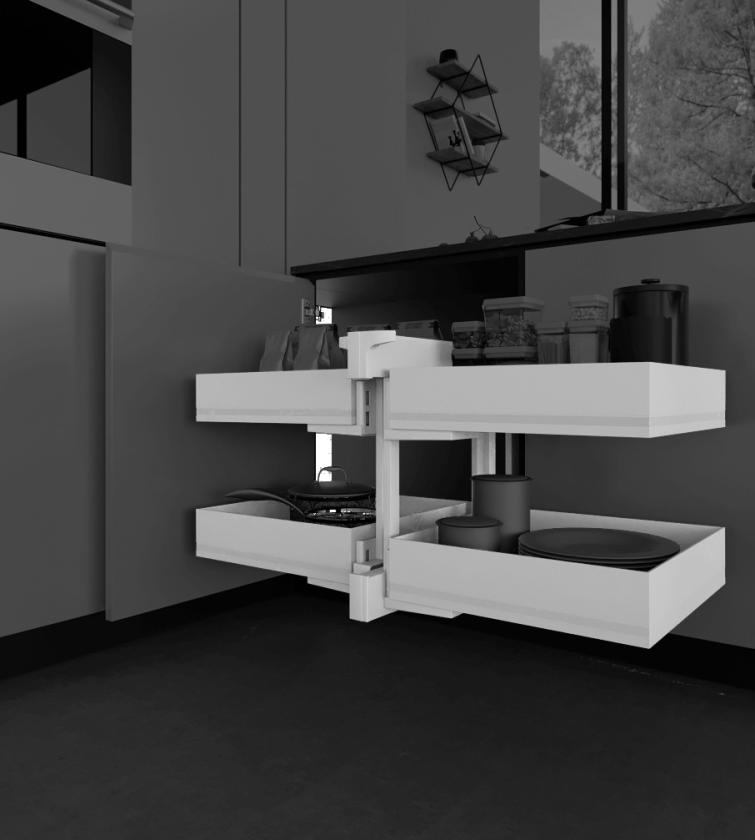
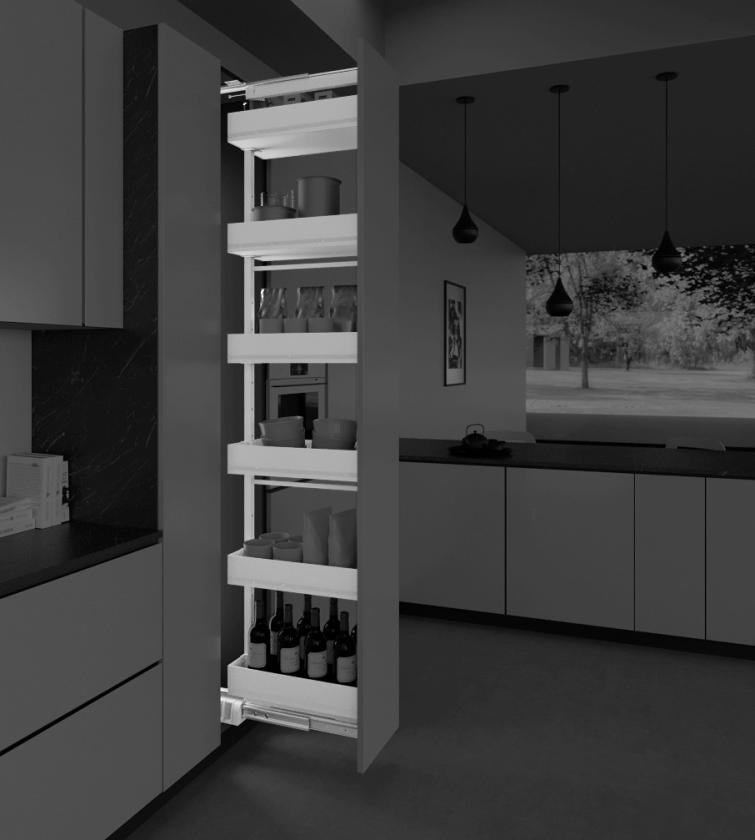
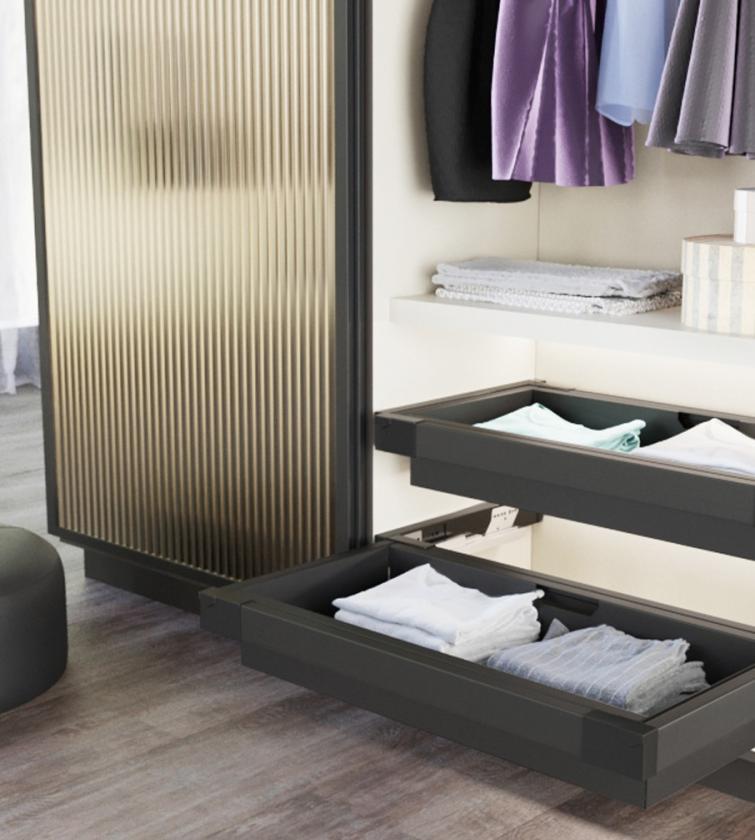
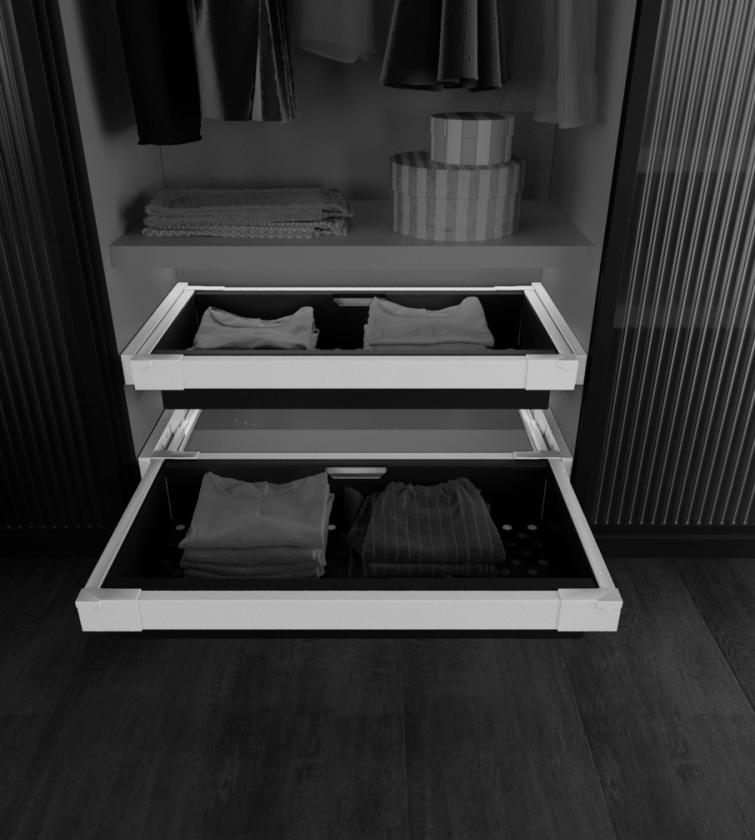
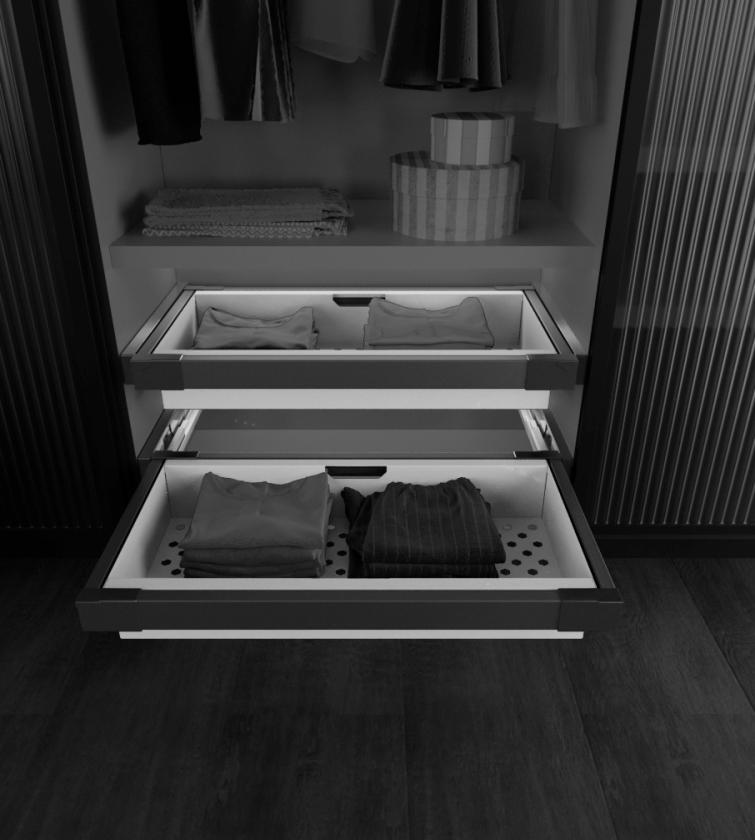
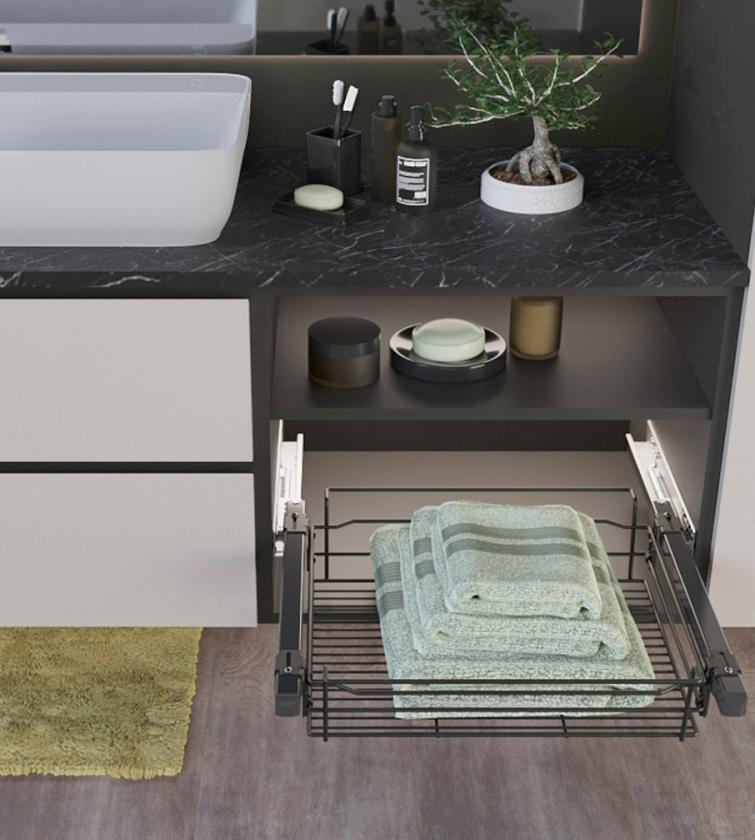
The Inoxa range includes pull-out systems made from pressed sheet metal and powder-coated metal wire, available in different configurations and finishes. The Zenith collection, dedicated to pull-out storage solutions for bathrooms, offers options designed to meet a variety of organisational needs.
The choice of materials and finishes helps define the overall quality of the solution and ensures consistency with the wider interior design project.
2. Space Requirements: Making the Most of Available Space Without Compromising Functionality
The dimensions of the unit are only the first factor to consider. To design a truly functional interior, it is also necessary to assess the usable depth, available width, height of the compartments and clearance required for the accessories to operate.
A spacious unit is not necessarily a practical one. If items are difficult to reach or accumulate in less accessible areas, even generous storage capacity can result in inefficient use of space.
The design process should therefore start with actual needs: which items need to be stored? Which are used most frequently? How much space is required to access and handle them comfortably?
At this stage, pull-out systems can make a significant contribution. They allow the full depth of the unit to be used more effectively and make internal storage areas easier to access, reducing the need to reach manually into the back of the cabinet.
One example is the 24 pull-out laundry hamper, available for units in different widths. The model must always be selected according to the actual dimensions of the compartment and the clearance required for installation.
In smaller bathrooms, carefully assessing these factors helps optimise space without making the room feel crowded.
3. Accessibility: Designing Around Everyday Routines
Accessibility in a bathroom unit is not just relevant to people with specific needs. It is a feature that affects the user experience of anyone who uses the space every day.
Opening a drawer, taking a towel, reaching for a personal care product or putting away laundry are simple actions, but how convenient they are also depends on the way the inside of the unit is organised.
To improve accessibility, it is useful to consider three key aspects:
- Visibility of contents: Items should be easy to identify without having to constantly move those stored in front of them.
- Ease of access: Systems should allow users to reach stored items through simple, natural movements.
- Organisation by frequency of use: Items used most frequently should be stored in the easiest-to-reach areas.
Choosing between a partial-extension and a full-extension system can affect how easily the contents can be accessed. The most suitable solution depends on the unit's configuration, the available dimensions and the intended use.
For example, the ZPBL pull-out laundry hamper is made from pressed and painted sheet metal and features full-extension runners. This configuration is designed to make the contents easier to access and simplify everyday use.
4. Internal Organisation: Every Function Deserves Its Own Space
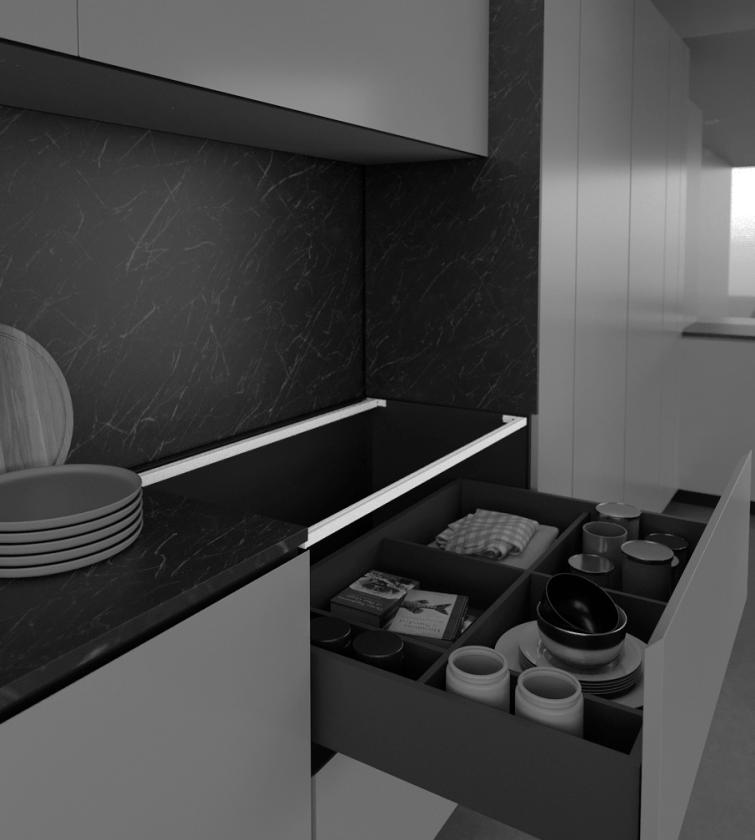
Another factor to consider is the intended use of each compartment. Personal care products, cleaning products, towels and laundry have different characteristics and require specific storage solutions.
Incorporating dedicated accessories helps prevent everything from being stored in the same space, improving the usability of the unit and keeping the bathroom tidier.
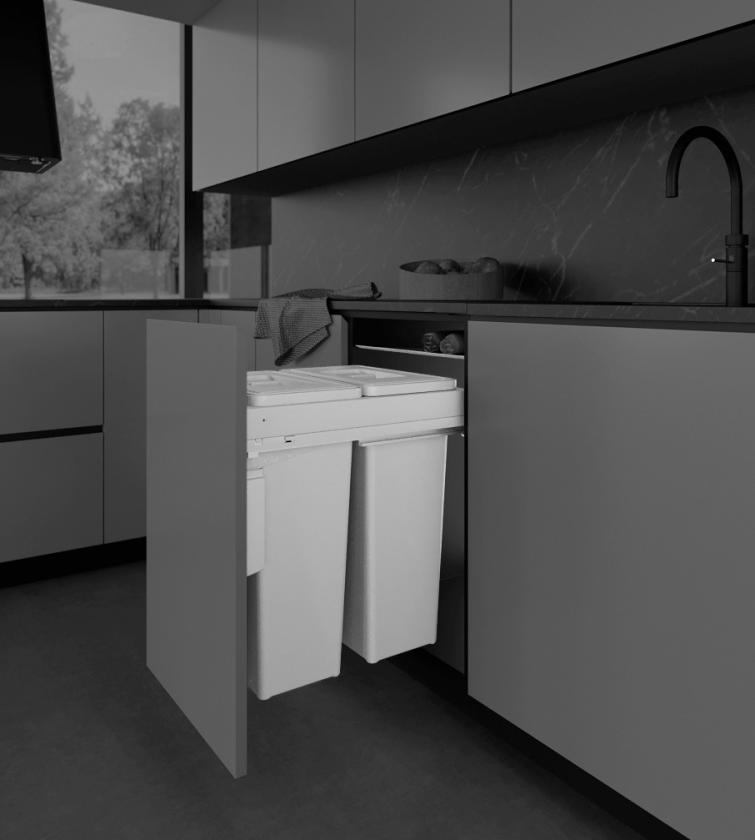
Pull-out laundry storage systems, for example, make it possible to incorporate a dedicated function into the unit without necessarily having to add a freestanding laundry basket.
Among the available options, the ZSBL pull-out laundry bag provides a dedicated solution for collecting laundry, while the 97PB laundry basket allows a plastic container to be integrated into the unit structure.
The choice depends on the compartment dimensions, the required capacity and the design preferences. In every case, the goal is to assign a specific function to each space, avoid unnecessary bulk and improve overall organisation.
For further insights, you can also read Inoxa's article on how to design bathroom space beyond the washbasin and sanitaryware.
5. Plan Before Choosing: The Difference Lies in the Details
Materials, space requirements and accessibility are not independent variables. Choosing an accessory affects the available space, the internal configuration and the way the unit is used.
For this reason, every component should be assessed as part of the overall design project, checking the actual dimensions, the clearance required by the mechanisms and compatibility with the unit structure.
Considering these factors in advance makes it possible to identify solutions that better match the customer's needs and avoid subsequent modifications to correct an impractical configuration.
The Inoxa bathroom range includes different types of pull-out storage solutions, which can be selected according to the unit configuration and organisational requirements. Consulting the individual product sheets in the Zenith collection provides further details on the features, dimensions and finishes of the available solutions.
The quality of a bathroom unit, in fact, depends on more than what is visible on the outside. It also depends on how the space inside is designed.
A Bathroom Unit Works Best When It Is Designed for Everyday Use
An effective design strikes a balance between aesthetics, space and practicality. Choosing the right materials, carefully assessing space requirements and ensuring easy access to stored items transforms a bathroom unit into a solution that meets everyday needs.
This is where internal accessories make a difference: components that integrate seamlessly into the overall design and enhance the user experience without compromising on aesthetics.
Discover all Inoxa's bathroom solutions and explore the features of the Zenith pull-out storage systems to find the most suitable accessories for designing functional, accessible spaces that complement the style of the room.