
Magazine
< back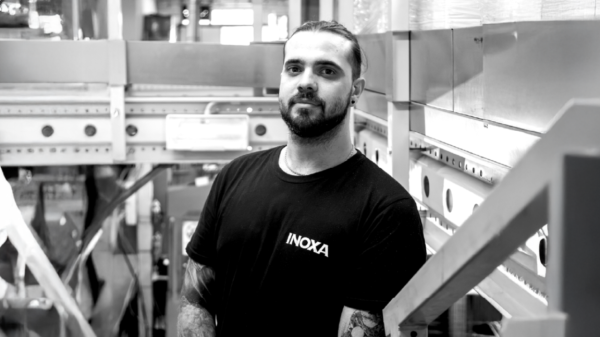
29 January 2026
Interview with Niccolò Caporaletti, Head of the metal wire Department
We interviewed Niccolò Caporaletti, who told us what it means to be the Head of the metal wire Department.
-
Can you tell us what your role in the metal wire department involves and which activities you handle on a daily basis?
My role involves overseeing and supervising the performance of the metal wire department, ensuring that all products and semi-finished items meet reliability and quality standards.
Every day I handle various activities, from assisting with and setting up machinery, to sorting orders, and monitoring production, following the process from the semi-finished product to the final product in the basket. -
Which skills do you consider essential for working metal wire with precision and ensuring the required quality?
To work metal wire effectively, I believe accuracy, attention to detail, and experience are essential - experience that is gained and strengthened every day on the job. Only in this way is it possible to achieve and maintain increasingly high quality standards. -
Which stages of the production process are the most delicate, and how do you maintain control and consistency?
I don’t think there is one stage that is more delicate than the others: every step is important and requires precision and attention. For this reason, each operation and each phase of the process includes specific checks, carried out directly at the workstations by each operator, to ensure consistency and constant quality. -
In your department, which innovations or technological improvements have led to the most significant changes in recent years?
The most significant changes in the department came with the introduction of two new welding robots, which have made it possible to significantly increase accuracy.
A fundamental role is also played by the constant collaboration with the technical department, focused on research and development of increasingly innovative and efficient methods. -
Working metal wire requires skill and experience: how important are manual skills compared to technology?
Skill and experience are both fundamental aspects. With technological advancement, manual skills are less central than in the past, but they remain an important part of daily work. It is essential to be able to operate machinery with competence and experience in order to ensure products always meet the required standards. -
How do you collaborate with other departments, from design to logistics, to ensure an efficient workflow?
I try to always be attentive and proactive in the communications I receive, both from the design department and from logistics. I believe that constant collaboration and direct dialogue between departments are essential to ensure a smooth and effective workflow. -
What are the most frequent challenges you face, and how do you overcome them through teamwork?
In a market that is increasingly focused on quality, the main challenge is ensuring zero-defect products. This goal is achieved through teamwork: from quality checks carried out by operators at their stations, to my supervision, and the support of the technical department and the quality manager. Constant dialogue is an integral part of daily work. -
Is there a recent project or result you are particularly proud of?
Having worked at Inoxa for almost four years, I have faced several challenges and changes, especially during the period when I first joined the company. I am proud of the journey so far and of the experience gained on the job, both operationally and organizationally, with the aim of continuing to grow further. -
Looking to the future, which goals would you like to achieve for the department, and which improvements would you like to introduce?
Looking ahead, the goal is to further reduce production waste while increasing precision, efficiency, and speed. The idea is to trigger an increasingly automatic and integrated system, both in terms of production and quality.